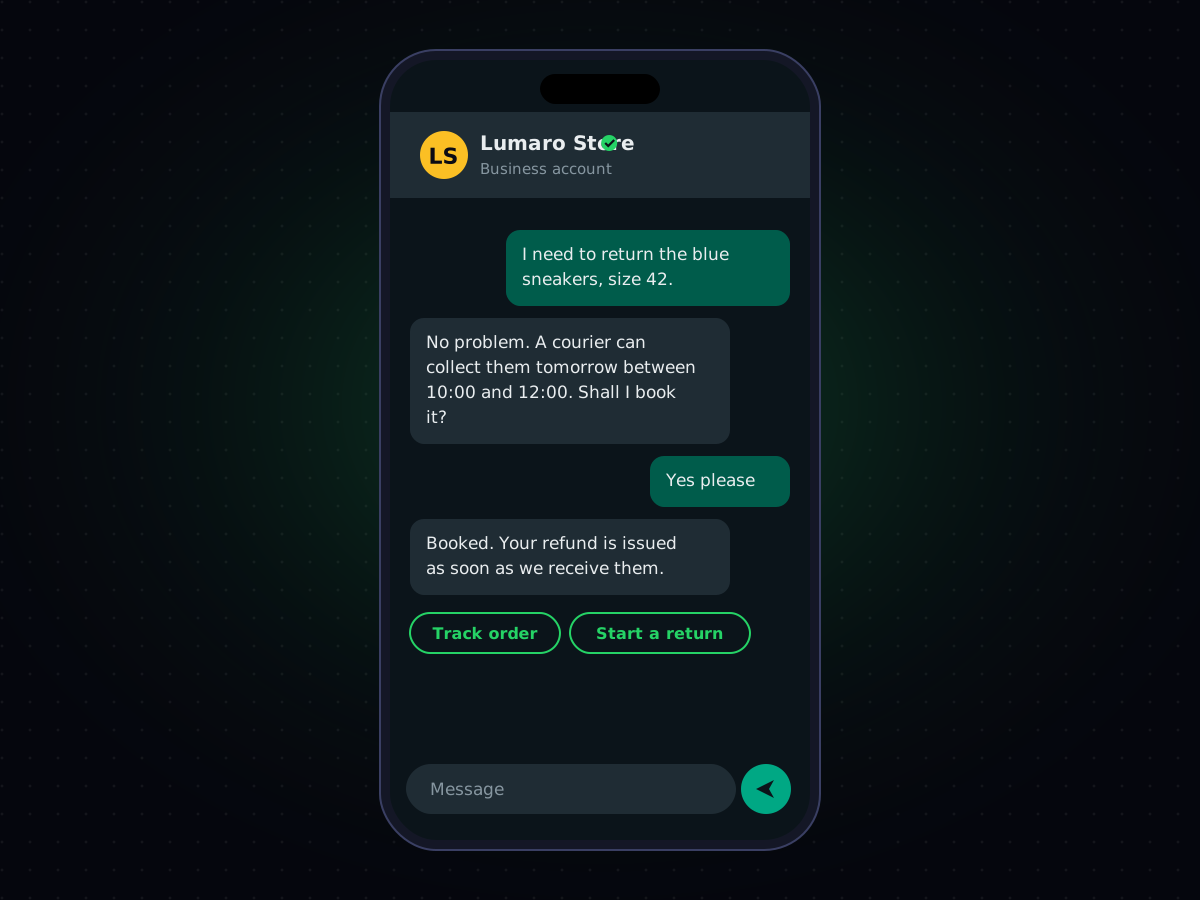

Both promise the same basic upgrade over plain SMS: images, buttons, branding, richer conversations. But RCS and WhatsApp Business API aren't interchangeable, and picking between them — or realizing you don't have to pick at all — depends on understanding what actually separates them.
The Core Difference: Native vs. App-Based
RCS lives inside the default messaging app already on most Android phones — no download, no separate account for the recipient to have set up in advance. WhatsApp requires the recipient to already have the WhatsApp app installed and an active account, which describes the vast majority of people in most markets, but not universally everyone.
Reach: Where Each One Actually Works
- RCS depends on device and carrier support; where it isn't supported (notably, historically on iPhones, though this is evolving), messages fall back automatically to plain SMS;
- WhatsApp depends on the recipient having the app installed, which is near-universal in large parts of Europe, Latin America, Africa, and Asia, but far less dominant in markets like the United States.
In practice, this means the better channel often depends heavily on your specific audience's geography and device mix, more than any inherent superiority of one over the other.
Conversation Style: One-Way Rich Messages vs. Two-Way Chat
RCS is closer in spirit to an upgraded SMS — branded, interactive, but still largely built around a business sending a message to a customer. WhatsApp is built around genuine two-way conversation: once a customer replies, a 24-hour open window lets free-form back-and-forth happen much like a normal chat. If your use case is an ongoing support conversation rather than a one-off notification, that difference matters a lot.
Verified Branding: Both Offer It, Differently
Both channels show a verified business name and logo rather than a bare phone number, which is a meaningful trust signal either way. RCS ties this to carrier-level sender verification; WhatsApp ties it to Meta's own Business verification process. Functionally, the end result for the customer looks similar.
So Which Should You Use?
For most businesses, the honest answer is both, used for different moments: RCS as SMS's natural upgrade path, with guaranteed reach via automatic fallback, for order updates and time-sensitive notifications; WhatsApp for ongoing conversation, support threads, and markets where it's already the dominant messaging app. We cover the broader decision framework, including where email fits too, in SMS vs. WhatsApp vs. RCS vs. Email.
Getting Started
Cyberscape runs RCS and WhatsApp Business API on the same platform as our SMS and Email channels, so testing both against your actual audience doesn't mean juggling separate integrations. See the full lineup on our Services page.