
Telecom and messaging projects fail for reasons that usually have nothing to do with the technology itself — scope creep, unclear ownership, timelines that never accounted for real-world dependencies. Project management is the discipline that exists specifically to prevent that.
What Is Telecom Project Management?
Project management, in this context, is the coordination layer that keeps a network or messaging platform project moving from initiation through close — managing scope, timeline, budget, and the dependencies between teams and vendors that a technical rollout inevitably involves. It's distinct from the technical implementation work itself; it's what keeps that work on track.
Why Telecom Projects Need Dedicated Project Management
Telecom and network projects tend to involve more moving parts than a typical software rollout: hardware procurement and lead times, coordination with carrier partners or regulatory bodies, integration with legacy systems that can't simply be switched off mid-project, and deployment windows that often have to work around live network traffic rather than a convenient maintenance schedule. Without dedicated project management, these dependencies tend to surface as delays discovered too late to absorb gracefully.
What Good Project Management Delivers
- Clear scope, agreed upfront — a defined boundary of what's included, so scope creep gets caught and negotiated rather than quietly absorbed into an already-tight timeline;
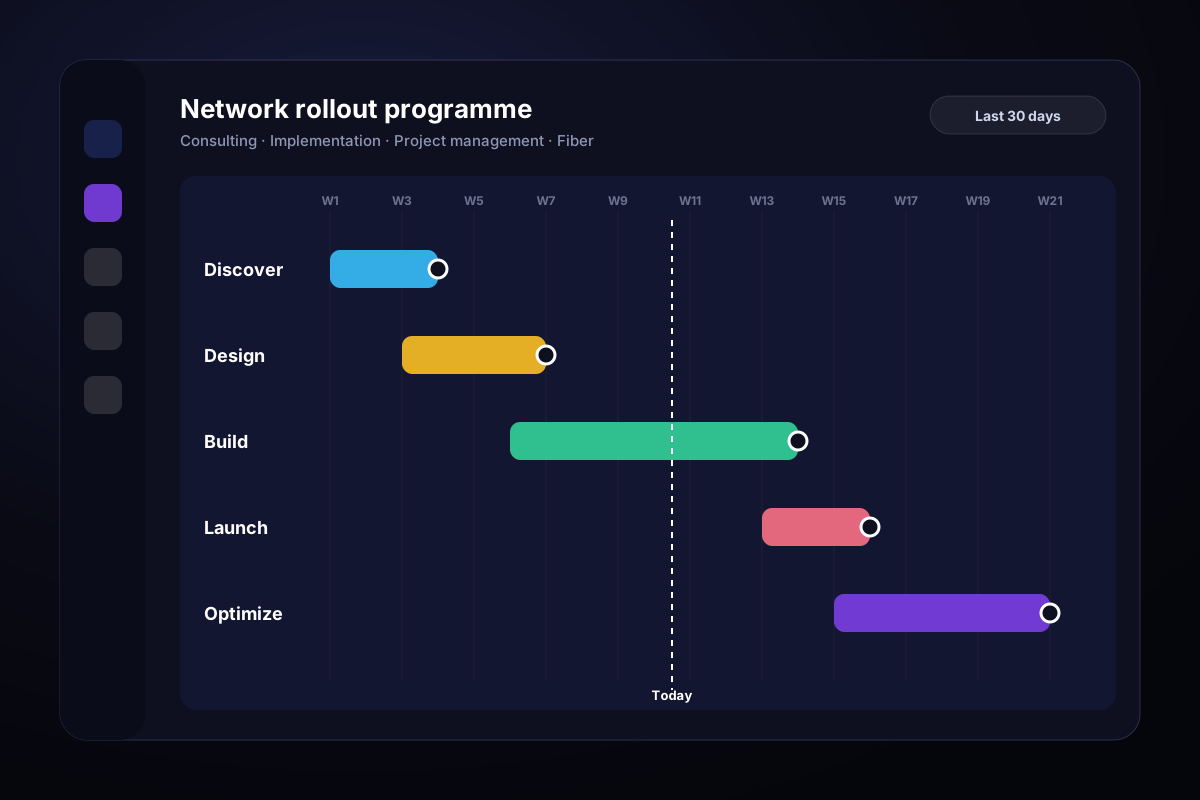
- Realistic sequencing — a schedule that accounts for genuine dependencies, like hardware lead times or required regulatory sign-offs, not just an idealized Gantt chart;
- Visibility for stakeholders — regular, honest status reporting that surfaces risk early rather than only when it's already become a problem; and
- A defined path to close — explicit acceptance criteria so everyone agrees when the project is actually finished, rather than it quietly fading into ongoing support.
On Time, On Budget, To Standard
The three things a project management function is ultimately judged on are also the three things most often at risk on a technical rollout: timeline, cost, and whether the delivered system actually meets the standard the business case was built around. Good project management doesn't guarantee a project has no surprises — it guarantees that when surprises happen, they're caught and managed rather than discovered at the worst possible moment.
Getting Started
Cyberscape's Professional Services include project management from initiation through close for every engagement we run — consulting, implementation, and fiber infrastructure alike. See our full approach on the Professional Services page.