

Every wireless network, every data center, every carrier interconnect eventually depends on a physical link somewhere that actually carries the traffic. Fiber optic infrastructure is that physical layer — unglamorous, easy to take for granted, and absolutely non-negotiable for anyone running a modern network.
What Is Fiber Optic Infrastructure?
Fiber optic infrastructure is the physical network of glass or plastic fiber cables that transmit data as pulses of light, forming the high-capacity backbone that connects everything from mobile towers to data centers to international internet exchanges. Compared to copper cabling, it carries dramatically more data, over much longer distances, with far less signal loss — which is why it underpins essentially all serious network infrastructure built in the last two decades.
Why Fiber Still Matters in a Wireless World
It's a common misconception that "wireless" networks don't need physical infrastructure. In reality, every cell tower needs a high-capacity connection back to the core network — called backhaul — and fiber is overwhelmingly the preferred way to provide it. As mobile networks move through 4G, 5G, and beyond, the amount of data each tower needs to backhaul keeps climbing, and fiber is one of the few mediums that can keep up without becoming the network's bottleneck.
Where Fiber Infrastructure Gets Used
- Mobile network backhaul — connecting cell towers to the core network with the capacity modern data demands require;
- Carrier interconnection — the links between operators and internet exchanges that make global connectivity possible;
- Enterprise connectivity — dedicated high-capacity links for businesses that can't rely on shared, contended bandwidth; and
- Data center interconnects — the high-throughput links between facilities that modern cloud and hosting infrastructure depends on.
What Building Fiber Infrastructure Actually Involves
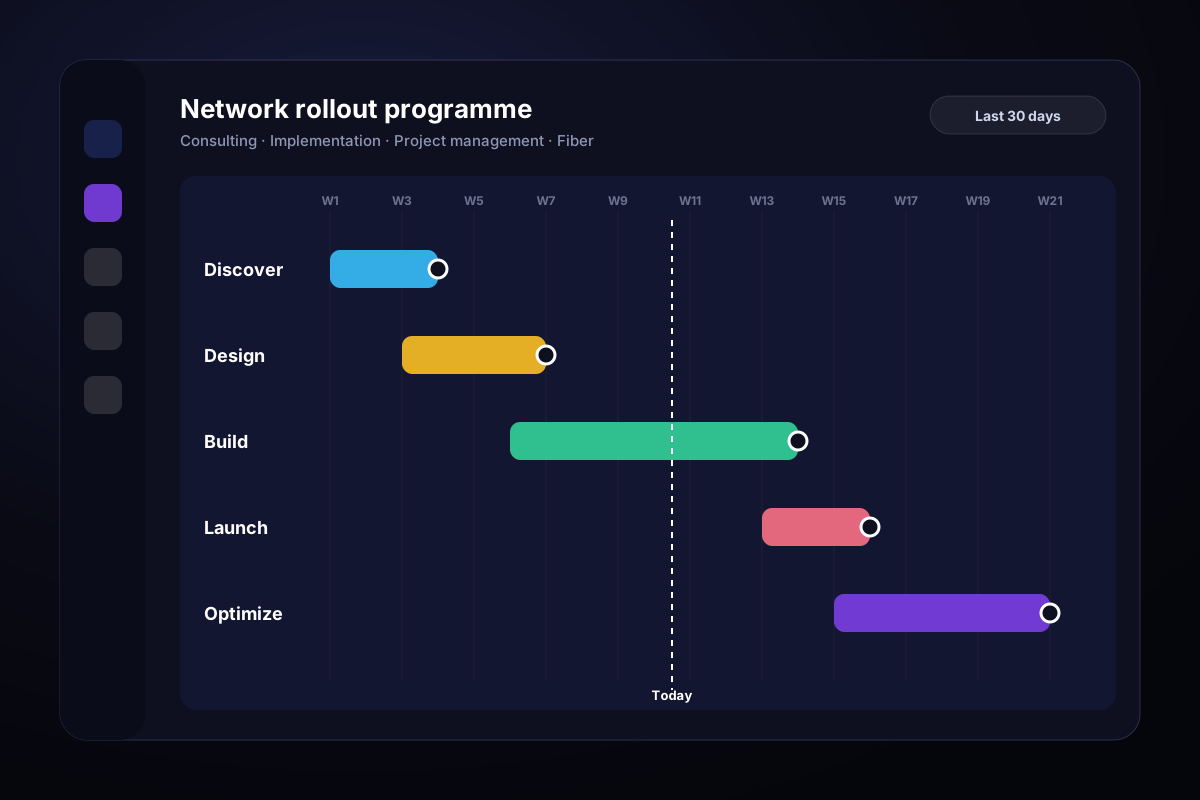
Fiber projects are as much about logistics and civil works as they are about the technology itself: route planning and permitting, physical installation (aerial, underground, or a mix), splicing and testing to guarantee signal integrity across the full run, and ongoing maintenance to protect the physical asset from everything that can damage a buried or aerial cable over years of service. Getting this right requires project management discipline as much as telecom engineering — see What Is Telecom Project Management? for how that side of a build is typically run.
Fiber as the Foundation Under Everything Else
Every other service covered in this series — SMSC, USSD, RCS, Signaling Firewalls — ultimately depends on network capacity that has to physically exist somewhere. Fiber infrastructure is rarely the visible part of a telecom project, but it's usually the part that determines whether everything built on top of it actually performs the way it's supposed to.
Getting Started
Cyberscape builds and maintains fiber optic infrastructure as part of our Professional Services, for operators, carriers, and enterprises that depend on reliable physical connectivity. See our full approach on the Professional Services page.