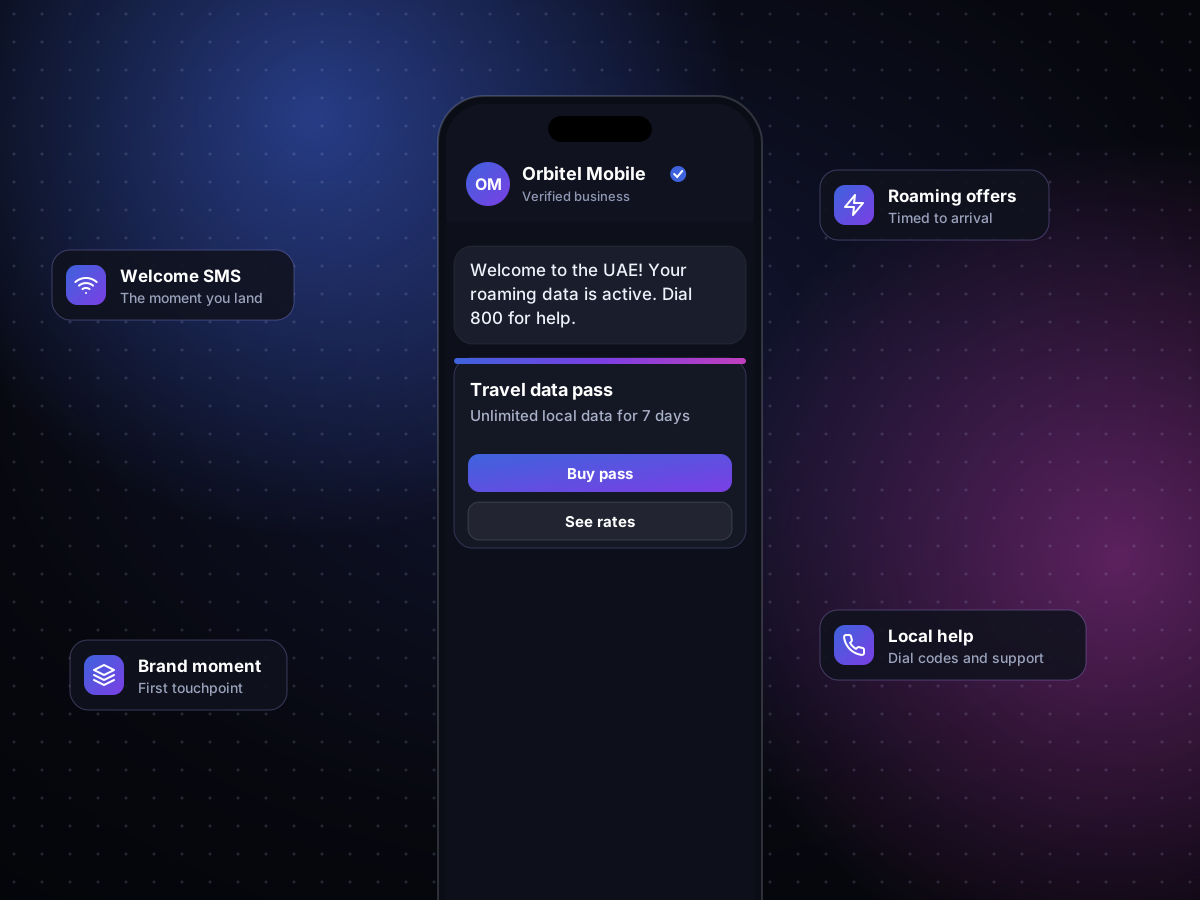

The first message a roaming subscriber gets when their phone connects to a foreign network is rarely an accident — it's a deliberately engineered touchpoint called Welcome SMS, and it does more commercial work in one text than almost any other message an operator sends.
What Is Welcome SMS (WSMS)?
Welcome SMS is an automatic message triggered the instant a subscriber's device connects to a network they're roaming on, typically welcoming them with the visited network's name, local emergency numbers, roaming rates, and how to reach customer support — all before the subscriber has opened a single app.
It's one of the simplest Value-Added Services to describe and one of the most operationally important to get right, because it's often the very first impression a visited network makes on an incoming roamer.
Why Welcome SMS Matters Commercially
- Transparency reduces bill shock — clearly stating roaming rates upfront heads off the surprise charges that generate support complaints and subscriber frustration;
- It's a branded first touchpoint — for the visited network, this is often the only direct communication a roaming subscriber ever receives from them, making tone and clarity genuinely important;
- It drives roaming product uptake — a well-designed Welcome SMS can point subscribers directly to a roaming data bundle or local offer, turning a routine notification into a revenue opportunity; and
- It's often a regulatory expectation — many jurisdictions require operators to disclose roaming rates to incoming subscribers, and Welcome SMS is the standard mechanism for meeting that requirement.
How Welcome SMS Is Triggered
Welcome SMS relies on real-time signaling to detect the moment a subscriber's device registers on the network — the same location-update signaling that makes calls and texts reach a roaming device in the first place. The message needs to fire within seconds of that registration, correctly localized to the subscriber's home network and language where possible, which means it depends on tight integration with the network's core signaling and messaging infrastructure, not a scheduled batch job.
Getting the Content Right
The best Welcome SMS messages are short, specific, and immediately useful: the network name, the local emergency number, a clear roaming rate or bundle offer, and a support contact — not a wall of legal disclaimer text. Subscribers skim it in a few seconds; anything that isn't immediately relevant just adds noise to a message that's supposed to build confidence, not confusion.
How It Is Triggered and What Makes a Good Roaming Welcome
- Trigger — the platform detects a roaming subscriber registering on the network through signaling events and sends one welcome message, with rules to avoid repeats during short trips between networks;
- Content — the network or operator name, how to reach customer care, emergency numbers and local information, in the subscriber’s language where possible;
- Commercial uses — data packs, tourist services or partner offers, subject to consent and local rules; and
- Not the same as marketing sign-up texts — a retail “welcome” text to new subscribers is a separate thing.
Our view: a roamer wants reassurance and prices, not a hard sell
A subscriber stepping off a plane worries about bill shock. We’d make the first message about reassurance, such as network name, support number and how to check charges, and place offers after that.
Roamers who feel informed are more likely to use data, which is the commercial result operators want.
Getting Started
Cyberscape delivers Welcome SMS as part of our System Integration & VAS services, integrated with the same core signaling infrastructure that powers our SMSC and other roaming-facing services. The System Integration & VAS Solutions page lists the complete portfolio.