
It's one of the most quietly profitable services in mobile telecom, and most subscribers who've bought one don't think of it as anything special: a Ring Back Tone replaces the standard ringing sound a caller hears with music, a greeting, or branded audio. For operators, it's also one of the longest-running, most reliable Value-Added Service revenue lines in the industry.
What Is RBT?
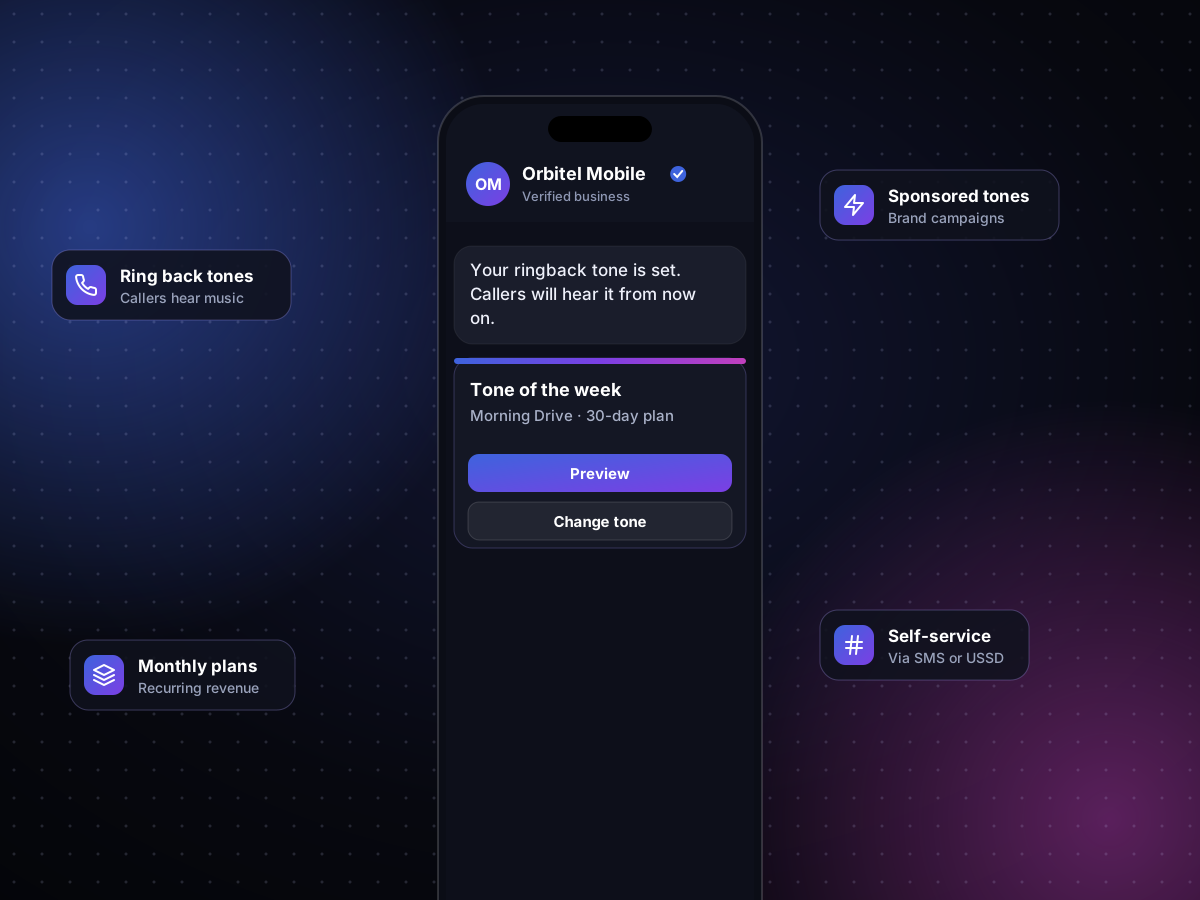
RBT (Ring Back Tone), also called Caller Ring Back Tone or CRBT, lets a subscriber choose what a caller hears while their phone is ringing, instead of the default ringing tone. Rather than a generic tone, callers hear a song clip, a personalized greeting, or promotional audio — selected and typically paid for by the person being called, not the caller.
How RBT Generates Revenue
RBT is usually sold as a recurring subscription: subscribers pay a small periodic fee to keep their chosen tone active, often bundled with the ability to change it or choose different tones for different callers or times of day. At scale, across a subscriber base of any real size, this becomes a durable, predictable recurring revenue stream that requires very little ongoing operational cost once the platform is deployed — which is exactly why it remains one of the most widely adopted VAS offerings worldwide, even in markets with heavy smartphone and app adoption.
Beyond Subscriptions: Why Operators Still Invest in RBT
- ARPU growth — a low-friction, low-cost add-on that increases average revenue per user without requiring new hardware or a data plan;
- Subscriber retention — subscribers who've personalized their account, even with something as simple as a tone, are measurably less likely to churn to a competing network;
- Advertising and promotional inventory — RBT slots can carry sponsored or promotional audio, creating a secondary monetization layer beyond direct subscriber fees; and
- Content partnerships — licensing music and content for RBT catalogs opens revenue-sharing relationships with labels and content providers.
RBT Platform Requirements
Running RBT at network scale requires more than a jukebox of audio clips: a content management system for the tone catalog, billing integration for subscription handling, and signaling integration so the correct tone plays reliably for every call, every time, without adding latency to call setup. It's core network infrastructure, not an app-layer add-on, which is why it's typically deployed as part of a broader System Integration engagement alongside SMSC and other VAS platforms.
Getting Started
Cyberscape delivers RBT platforms as part of our System Integration & VAS services for mobile network operators, alongside Voicemail, USSD, and the rest of our carrier-grade VAS lineup. See the full offering on our System Integration & VAS Solutions page.