
Voicemail is one of the oldest Value-Added Services in mobile telecom, and also one of the most quietly reinvented. The core function — catching a call when a subscriber can't answer — hasn't changed, but how subscribers interact with it has moved a long way from dialing in and entering a PIN.
What Is Voicemail Infrastructure?
At the network level, voicemail infrastructure handles recording, storing, and delivering voice messages left for a subscriber who didn't answer a call — whether their phone was off, out of coverage, or busy on another line. That means call-forwarding logic to detect an unanswered call, greeting playback, message recording and storage, and notification back to the subscriber that a message is waiting.
What Is Visual Voicemail (VVM)?
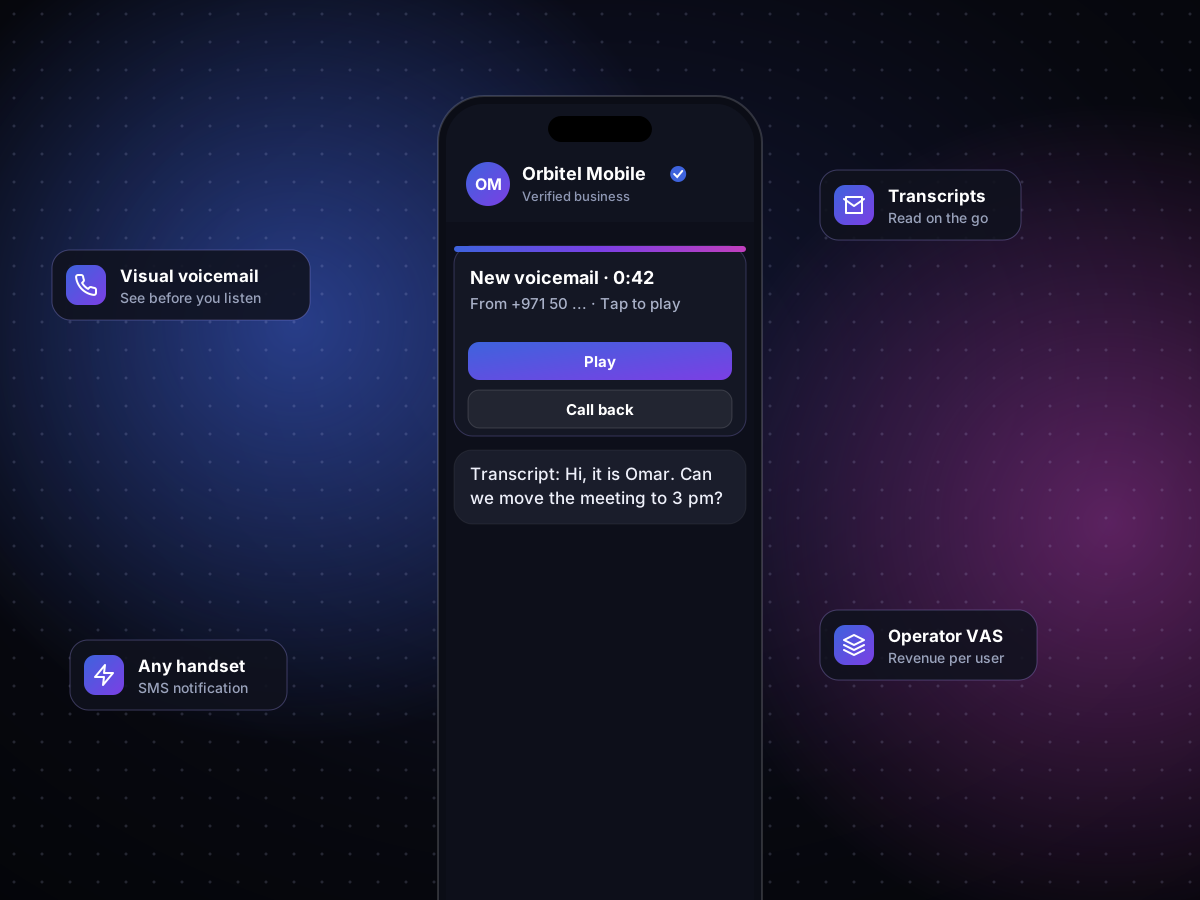
Visual Voicemail is the modern layer on top of that core function: instead of dialing into a voicemail system and listening through messages sequentially, subscribers see a list of messages directly on their phone screen, can play any one of them in any order, skip around, and delete without ever calling in. It's the same underlying voicemail infrastructure, delivered through a dramatically better subscriber experience — and it's now the baseline expectation on most smartphones.
Why Voicemail Infrastructure Still Matters
- Subscriber expectation — voicemail remains a default, expected feature; its absence is noticed immediately;
- Business continuity — for business subscribers particularly, a missed call that leaves no trace is a lost opportunity; voicemail (and the missed-call notification that often accompanies it) closes that gap;
- VVM as a differentiator — operators offering a smooth, app-like visual voicemail experience stand out against those still running dial-in-only systems; and
- Integration with other VAS — voicemail commonly pairs with Missed Call Notification, alerting a subscriber the moment they're reachable again that a message is waiting.
What Operators Need to Run It Well
Reliable voicemail at network scale means storage infrastructure that scales with subscriber count and message length, call-forwarding logic integrated cleanly with the network core, and — for VVM specifically — a client experience that works consistently across device types and operating systems. Getting this wrong shows up immediately as subscriber complaints, since voicemail is one of the few VAS features people notice the instant it doesn't work.
Getting Started
Cyberscape provides voicemail and visual voicemail infrastructure as part of our System Integration & VAS services, alongside SMSC, USSD, RBT, and the rest of our carrier-grade platform. Explore every platform on our System Integration & VAS Solutions page.