
Before smartphones, before mobile data, and still today across huge parts of the world, there's a messaging technology running on literally every phone in existence: USSD. If you've ever dialed a short code to check your prepaid balance, you've used it.
What Is USSD?
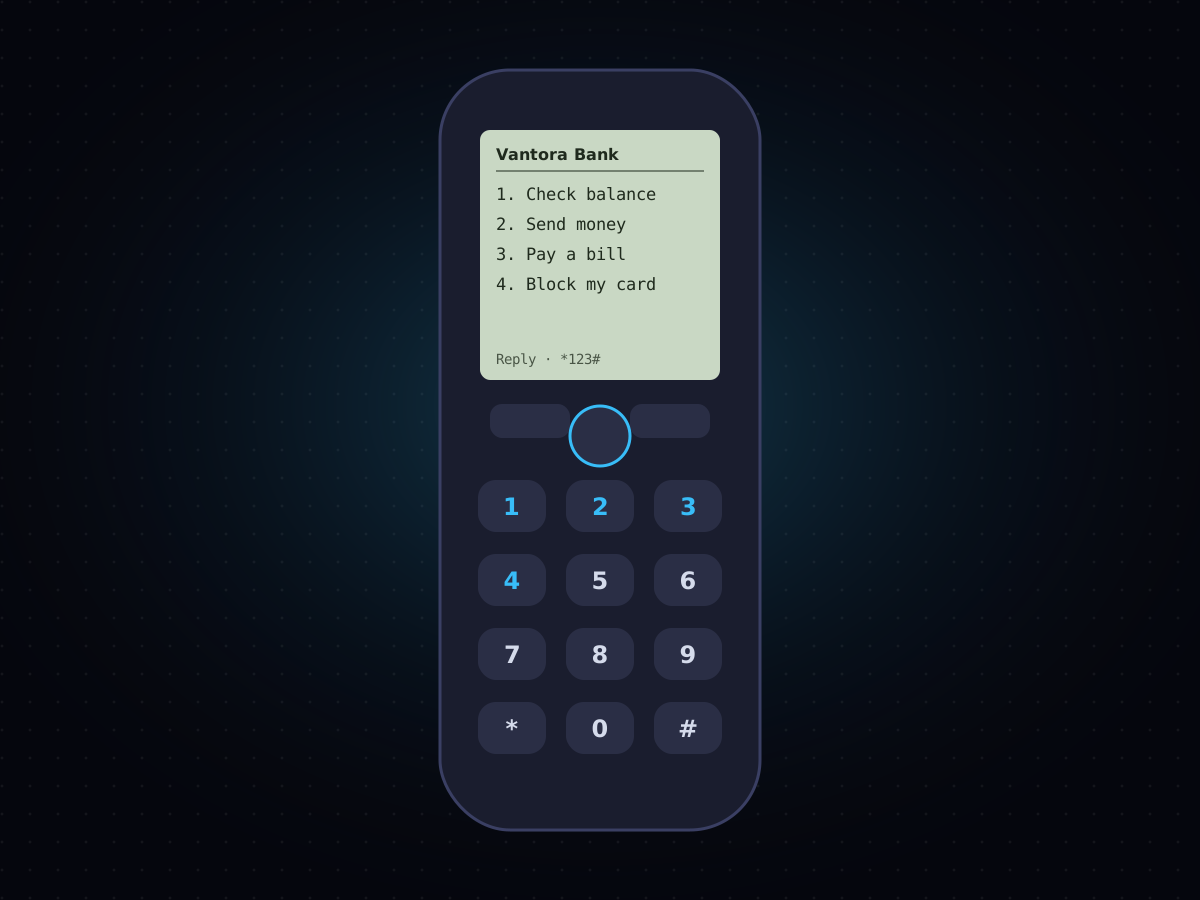
USSD (Unstructured Supplementary Service Data) is a real-time, session-based communication protocol built into the GSM standard, used to create interactive, menu-driven experiences on any mobile phone. Dial a code like *123#, and instead of a text message, you get a live menu on screen — check your balance, buy a data bundle, send mobile money, take a quick survey — with your selections sent back to the network in real time.
Unlike SMS, nothing is stored on the phone afterward; it's a live session that opens, runs, and closes, similar in spirit to a phone call but text-based.
How USSD Differs From SMS
- Session-based, not message-based — USSD is a live back-and-forth conversation while the session is open, not a message sitting in an inbox;
- No data connection required — it works on the most basic feature phone, with zero internet and zero app;
- Nothing is stored — once the session ends, there's no message history, which suits sensitive interactions like balance checks or PIN entry; and
- Menu-driven, not free text — USSD guides the user through structured options rather than open conversation.
What USSD Is Used For
USSD quietly runs some of the most heavily used services in mobile: mobile money transfers (a huge share of financial inclusion in emerging markets runs entirely on USSD), prepaid balance and data bundle purchases, network self-care menus, voting and polling campaigns, and customer surveys that need a response from any handset, not just smartphones.
For businesses and operators reaching audiences where smartphone and data penetration isn't universal, USSD remains one of the only channels that guarantees reach regardless of device.
Why USSD Still Matters in 2026
It's easy to assume USSD is legacy technology that smartphones have made obsolete, but the numbers say otherwise: mobile money platforms built on USSD move billions of dollars a year across Africa, South Asia, and Latin America, precisely because it doesn't require a data plan or a specific phone model. For a mobile network operator, USSD infrastructure isn't a nostalgic holdover — it's active revenue-generating infrastructure serving a real and often underserved segment of subscribers.
USSD as Part of the Operator Stack
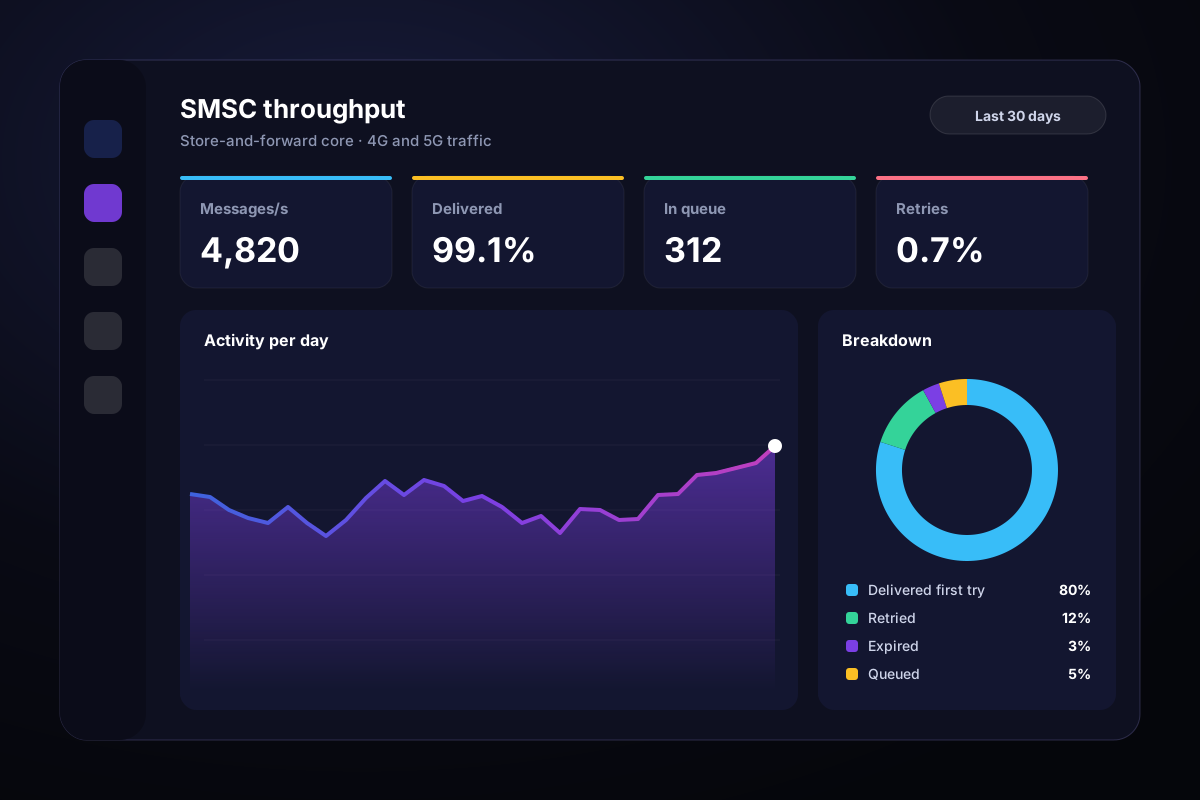
USSD typically runs alongside an operator's SMSC (see What Is an SMSC?) as part of the same core Value-Added Services layer, often sharing infrastructure with self-care menus and mobile money integrations. It's frequently the first channel operators use for subscriber self-service before building out app-based alternatives.
Getting Started
Cyberscape's System Integration & VAS services include USSD platform deployment alongside SMSC, Voicemail, Signaling Firewall, and eSIM management — carrier-grade infrastructure for operators who need interactive, universal-reach services running on day one. Explore every platform on our System Integration & VAS Solutions page.