
Every SMS ever sent has passed through a piece of infrastructure most people never think about: the SMSC. It's invisible to the end user by design, but for mobile network operators, it's one of the most critical systems they run.
What Is an SMSC?
An SMSC (Short Message Service Center) is the piece of network infrastructure responsible for storing, forwarding, and delivering SMS messages between mobile devices. When someone sends a text, it doesn't travel directly to the recipient's phone — it goes to the sender's SMSC first, which then routes it toward the recipient's network, retrying delivery if the phone is switched off or out of coverage, and confirming delivery once it succeeds.
Every mobile network operator needs one. It's the store-and-forward layer that makes SMS reliable even when a recipient's phone isn't reachable the instant a message is sent.
How Does an SMSC Work?
At a basic level, an SMSC does four things for every message that passes through it:
- Receives the message from the originating device or application;
- Stores it temporarily if the recipient's device isn't immediately reachable;
- Forwards it to the recipient's network once a delivery path is available, using signaling protocols to locate the subscriber; and
- Confirms delivery back to the sender, or retries on a schedule if delivery fails, until the message expires.
For messages crossing between different operators or countries, the SMSC also handles interconnection — working with other carriers' SMSCs and international hubs to get a message from one network to another, which is why cross-border SMS delivery quality varies so much depending on the strength of an operator's interconnect relationships.
Why SMSC Infrastructure Quality Matters
Not all SMSC infrastructure performs the same way, and the difference shows up directly in what subscribers and business customers experience:
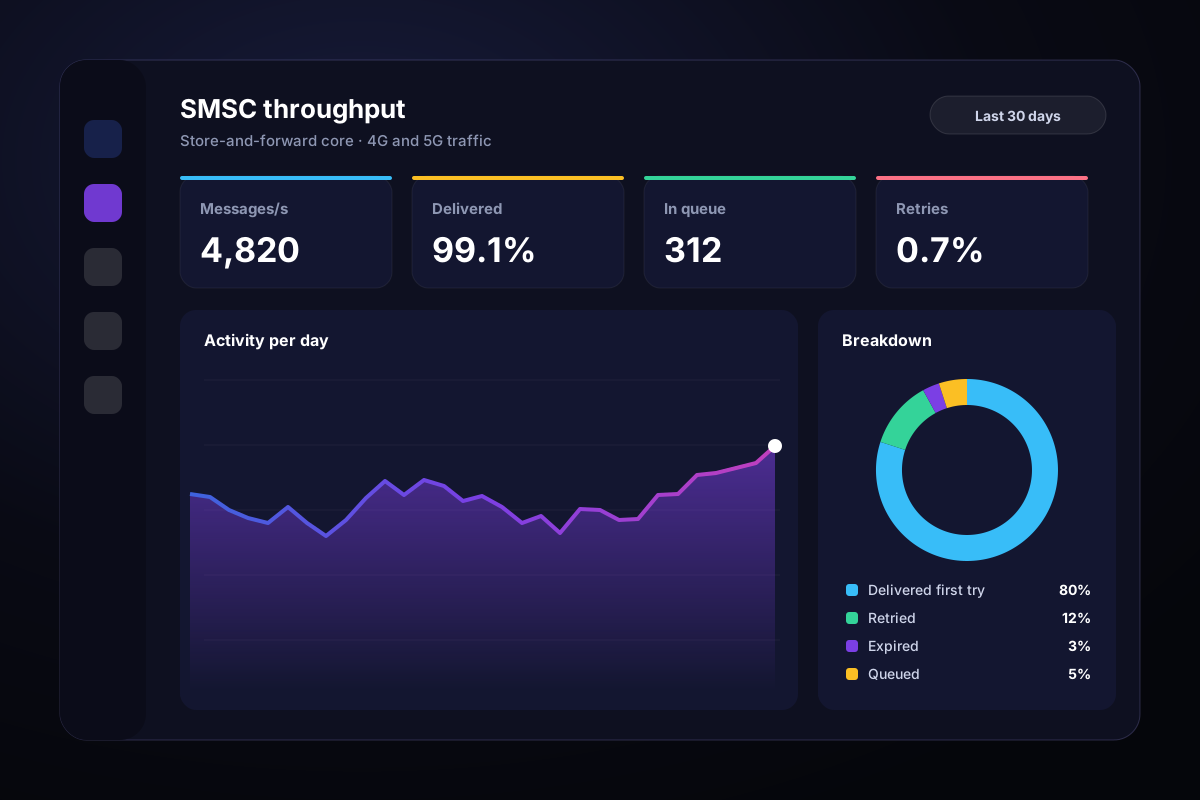
- Throughput — how many messages per second the system can process, which matters enormously during high-traffic events like OTP surges or emergency alerts;
- Reliability — redundancy and failover, so a hardware fault doesn't mean lost messages;
- Interconnect quality — how well-routed the operator's agreements are with other carriers, which affects delivery speed and success rates for messages leaving the network; and
- Anti-fraud and filtering — the ability to detect and block spam or spoofed traffic before it reaches subscribers.
SMSC as Part of a Broader VAS Stack
An SMSC rarely runs in isolation. Operators typically pair it with complementary Value-Added Services — USSD for interactive menu-based services, RBT (Ring Back Tones), Voicemail, and Anti-Spam filtering — all of which touch the same subscriber messaging and signaling layer. Increasingly, a Signaling Firewall sits alongside the SMSC too, protecting the same network paths from SS7 and Diameter-level attacks. We cover that specific piece in What Is a Signaling Firewall?.
Building vs. Outsourcing SMSC Infrastructure
Some operators run their own SMSC in-house; many others, especially where scaling quickly or entering a new market, work with a System Integration partner who provides carrier-grade SMSC infrastructure, interconnection, and support without the operator needing to build and staff it from scratch. That's a meaningful decision that usually comes down to volume, in-house telecom engineering capacity, and how quickly the network needs to be live.
Cyberscape provides SMSC and messaging infrastructure as part of our System Integration & VAS services for mobile network operators, alongside USSD, RBT, Voicemail, Anti-Spam, and eSIM management. You can see the full lineup on our System Integration & VAS Solutions page.