
Operators sit on some of the most valuable, highest-attention real estate in mobile: USSD menus, voicemail greetings, RBT slots, and other VAS touchpoints that subscribers interact with constantly. Ad Management is the infrastructure that turns that attention into a monetizable channel.
What Is Ad Management?
Ad Management is the set of tools and platforms operators use to insert, manage, and monetize advertising content delivered through their own Value-Added Service channels — USSD sessions, voicemail, RBT, and similar subscriber touchpoints — turning existing infrastructure into an additional revenue stream that doesn't depend on subscription fees.
Where Operator Ad Inventory Actually Lives
- USSD sessions — a sponsored message or offer inserted into a menu screen subscribers are already interacting with;
- RBT slots — promotional audio played during select ring-back tone plays, alongside or instead of a subscriber's chosen tone;
- Voicemail greetings — a brief sponsored message before or after the standard greeting; and
- SMS and self-care channels — targeted promotional content delivered alongside routine account notifications.
Why This Matters as a Revenue Line
Every one of these channels already has guaranteed subscriber attention — someone dialing a USSD code or receiving a call is, by definition, engaged in that moment. Ad Management platforms let operators sell that attention to advertisers directly, without needing subscribers to opt into anything new or install an app. It's a secondary monetization layer sitting on top of infrastructure the operator has already built and paid for, which is what makes it attractive: the marginal cost of adding ad delivery to an existing VAS channel is low relative to the revenue it can generate.
What an Ad Management Platform Needs to Do Well
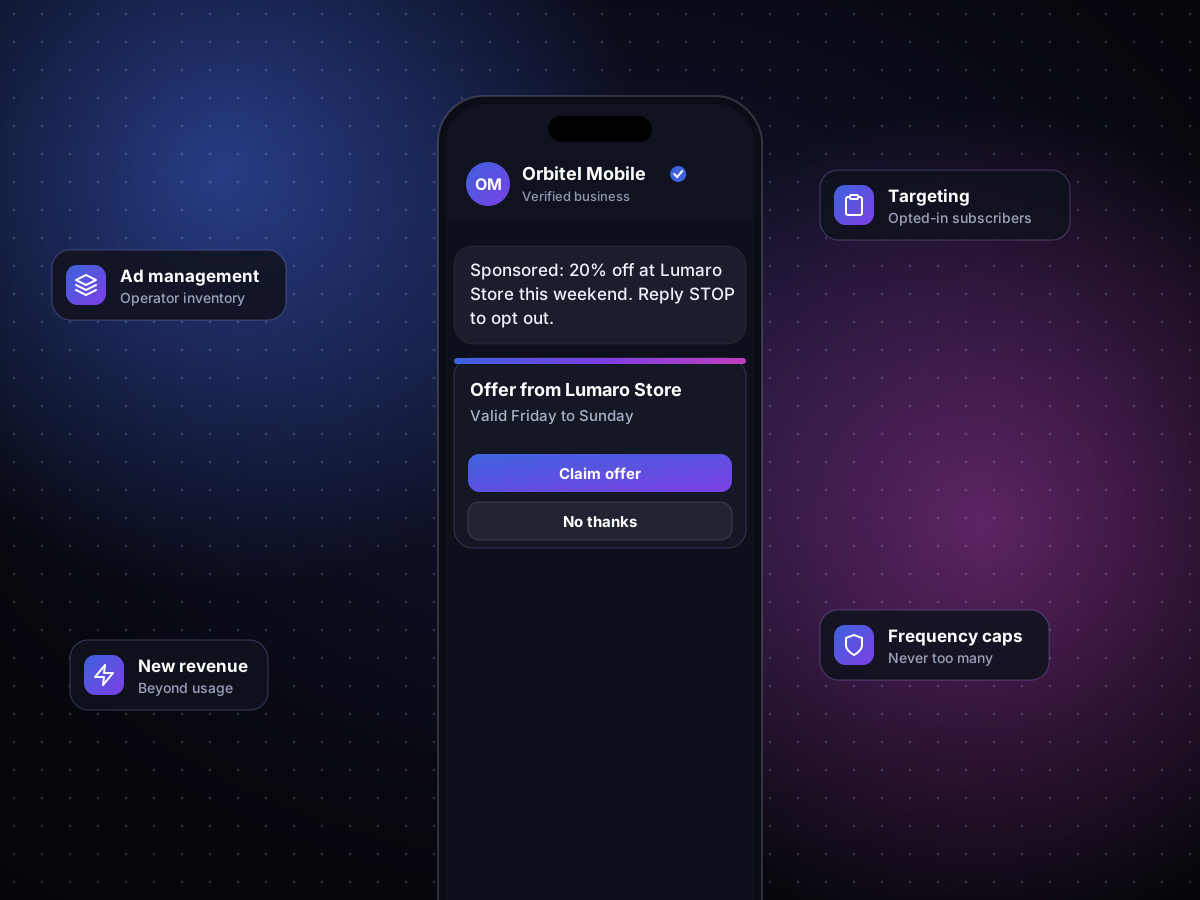
Beyond simply inserting content, a real Ad Management platform needs targeting logic (so ads are relevant rather than intrusive), frequency controls (so the same subscriber isn't shown the same ad on every interaction), and reporting that advertisers can actually use to evaluate performance. Getting the balance wrong — too many ads, poorly targeted — risks degrading the very subscriber experience the underlying VAS service was built to provide.
Consent, Privacy and Measurement for Operator Advertising
- Consent — subscribers should agree to receive advertising on services like messaging or USSD, and be able to withdraw;
- Privacy — targeting based on subscriber data must follow data-protection and telecom rules, and many deployments use aggregated or segment-level targeting instead of individual profiles;
- Frequency controls — cap how often one subscriber sees ads, since attention on these channels is the asset being sold; and
- Measurement — report impressions, responses and, where possible, outcomes, in terms advertisers can verify.
Our view: operator advertising only works if subscribers still trust the channel
The attention that makes USSD or ring back tone valuable to advertisers is the same attention that annoys subscribers when it is overused. We’d advise operators to begin with opt-in, relevant formats and strict frequency caps, and to measure complaints and opt-outs as seriously as revenue.
A short-term revenue push that erodes trust in the channel loses over time.
Getting Started
Cyberscape provides Ad Management as part of our System Integration & VAS services, designed to work across USSD, RBT, and voicemail channels alongside the rest of our carrier-grade VAS platform. Explore every platform on our System Integration & VAS Solutions page.