
The physical SIM card is disappearing. Flagship phones, tablets, smartwatches, and a growing share of IoT devices now ship with eSIM support, and for mobile network operators, that shift changes what it takes to get a subscriber connected — and what infrastructure needs to be in place to manage them.
What Is an eSIM?
An eSIM (embedded SIM) is a SIM built directly into a device rather than inserted as a removable card. Instead of swapping a physical card to change carriers, a subscriber's profile is provisioned onto the device digitally — typically by scanning a QR code or through an app — and can be updated, switched, or removed remotely.
What Is eSIM Management?
eSIM management is the operator-side infrastructure and platform that makes this possible: provisioning subscriber profiles onto devices remotely, handling profile downloads and activations, supporting multiple profiles per device, and managing the full lifecycle of an eSIM subscription without ever touching a physical card. It's the system that sits behind the "scan this QR code to activate" moment.
For an operator, this isn't optional infrastructure if they want to compete for modern device traffic — it's what's required to support the devices subscribers are already buying.
Why eSIM Matters for Operators
- Faster activation — a subscriber can be connected in minutes, remotely, without visiting a store or waiting for a physical card to ship;
- Multiple profiles per device — increasingly common for travelers and dual-line users, who can hold a local and a home-network profile on the same device;
- Lower logistics overhead — no physical card manufacturing, distribution, or in-store inventory to manage; and
- IoT scale — connected devices from wearables to industrial sensors increasingly rely on eSIM or the related eUICC standard for remote provisioning at a scale physical SIM logistics can't support.
The Technical Pieces Behind eSIM
Supporting eSIM at the network level involves a few coordinated systems: a subscription manager that handles profile downloads to devices (following the GSMA's remote SIM provisioning standards), integration with device manufacturers' eSIM architecture, and backend systems that can issue, suspend, or transfer a profile without physical intervention. For an operator without this already built, standing it up from scratch is a significant undertaking — which is why it's typically delivered as part of a broader System Integration engagement rather than built in isolation.
eSIM as Part of the Operator Stack
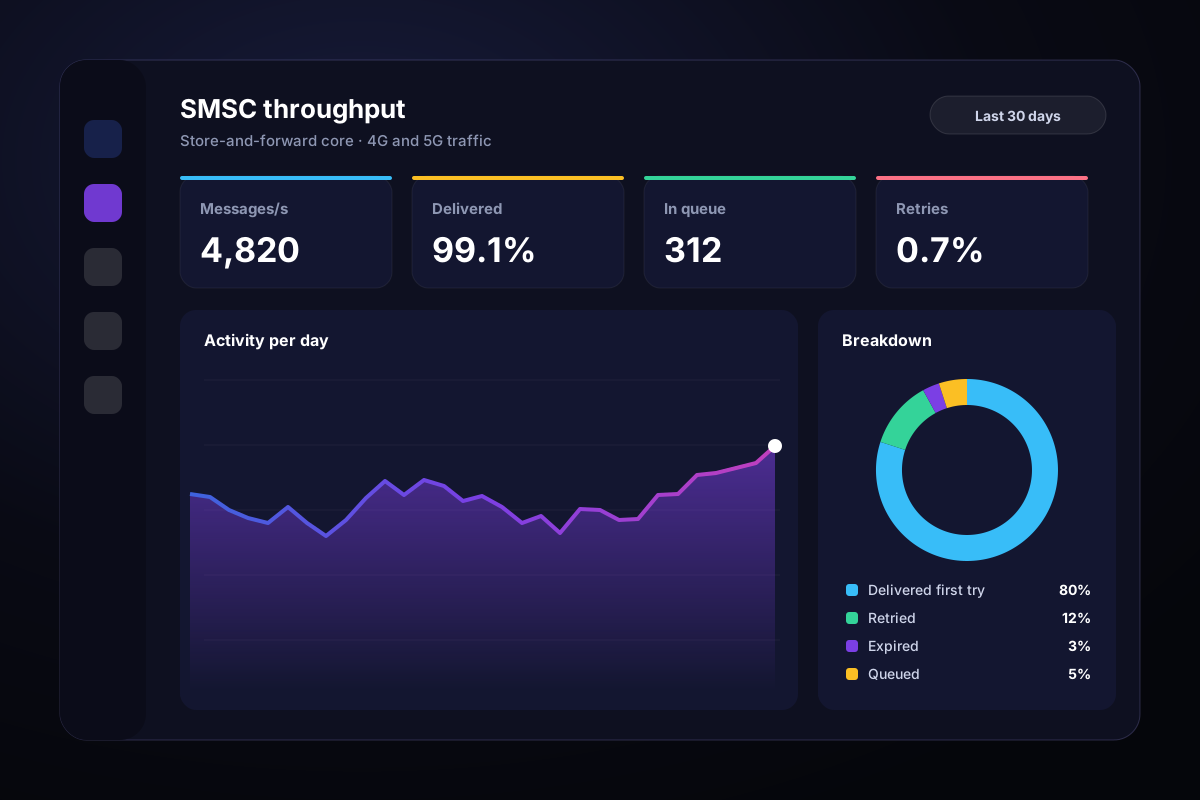
eSIM management typically sits alongside an operator's other core infrastructure — the SMSC handling messaging (see What Is an SMSC?), USSD for interactive subscriber services, and a Signaling Firewall protecting the network's signaling layer. Getting eSIM right depends on it integrating cleanly with what's already running, not replacing it.
Getting Started
Cyberscape's System Integration & VAS services include eSIM management alongside SMSC, USSD, RBT, Voicemail, and Anti-Spam infrastructure, built for operators who need this capability without standing up an entirely new platform in-house. See the full offering on our System Integration & VAS Solutions page.