

Mobile networks talk to each other constantly behind the scenes — locating subscribers, routing calls and texts, authenticating roaming devices — using signaling protocols built decades ago, long before network security was a serious design concern. A Signaling Firewall exists to close the gap between those aging protocols and the security operators need today.
What Is a Signaling Firewall?
A Signaling Firewall is a security layer that sits between a mobile network's core and the outside interconnection world, inspecting and filtering the signaling traffic that flows between operators — primarily over the SS7 and Diameter protocols — to block malicious or malformed messages before they can reach subscribers or network infrastructure.
Unlike a conventional internet firewall, it isn't filtering web traffic; it's protecting the specialized signaling conversations mobile networks have with each other to make calls, texts, and roaming actually work.
Why SS7 and Diameter Need Protection
SS7 (Signaling System No. 7) is the protocol that's coordinated calls and texts between global telecom networks since the 1970s. Diameter plays a similar role for modern 4G and 5G networks. Both were designed for a world of a small number of trusted, cooperating operators — not the far larger, more open interconnection ecosystem that exists today. That gap has become a well-documented attack surface: exploiting SS7 or Diameter weaknesses can, in the worst cases, allow interception of calls and texts, subscriber location tracking, or fraud.
A Signaling Firewall is the operator's primary defense against exactly that: it doesn't replace SS7 or Diameter, it monitors and filters what's allowed to pass through them.
What a Signaling Firewall Actually Blocks
- Location tracking attempts — requests trying to determine a subscriber's location without authorization;
- Interception attempts — signaling manipulation aimed at redirecting or intercepting calls and texts;
- Fraud traffic — including SMS spoofing and unauthorized billing manipulation; and
- Malformed or non-compliant messages — signaling traffic that doesn't conform to expected protocol behavior, often the first sign of a probing attack.
It does this in real time, at the volume of an operator's full interconnection traffic, which is why it's purpose-built infrastructure rather than a general-purpose security appliance.
Signaling Security as Part of the Network Stack
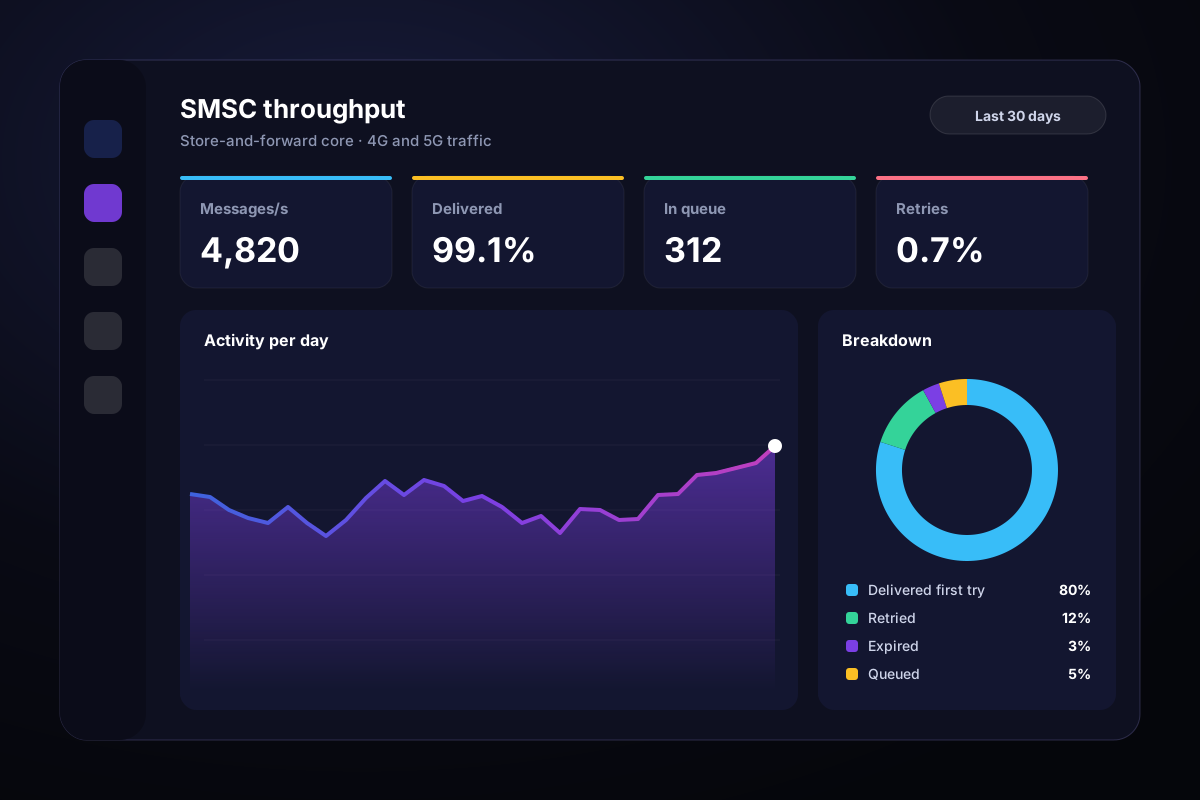
A Signaling Firewall protects the same interconnection layer that the SMSC relies on to route messages between operators (see What Is an SMSC?), which is why the two are usually deployed and managed together rather than as separate, disconnected systems. Anti-Spam filtering complements it from the messaging-content side, while the firewall handles protocol-level threats underneath.
Getting Started
Cyberscape provides Signaling Firewall protection as part of our System Integration & VAS services for mobile network operators, alongside SMSC, USSD, RBT, Voicemail, Anti-Spam, and eSIM management — carrier-grade infrastructure delivered and supported end-to-end. See the full lineup on our System Integration & VAS Solutions page.