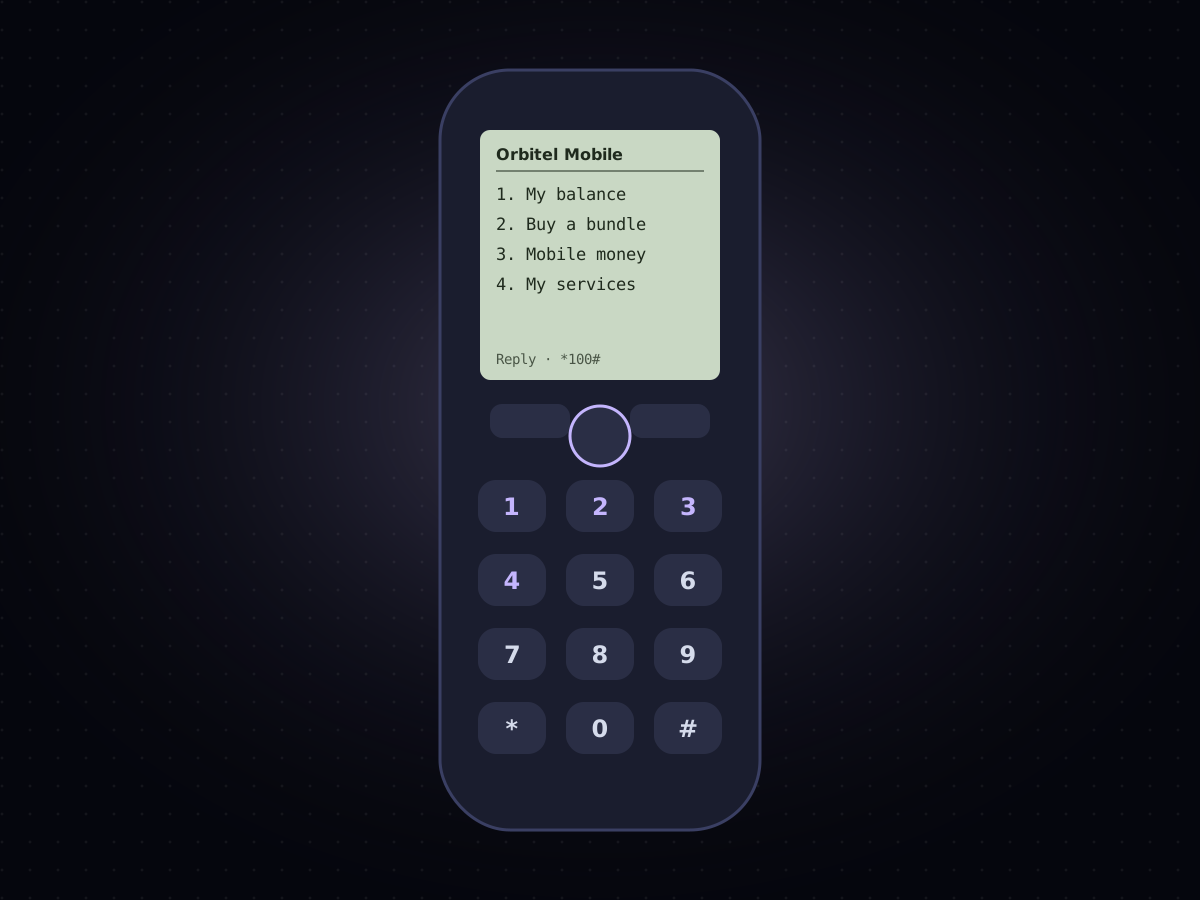

More money moves through USSD-based mobile money platforms every year than most smartphone-based fintech apps will ever touch. It's easy to overlook from a market where banking apps are the default, but for a huge share of the world's population, USSD isn't a legacy fallback — it's the primary interface to formal financial services.
Why Mobile Money Chose USSD
Mobile money platforms emerged to serve populations with mobile phones but limited or no access to traditional banking, often in markets where smartphone and data penetration remained low even as basic mobile phone ownership became near-universal. USSD fit that reality perfectly: it works on any handset, requires zero data connection, and needs no app download — removing every barrier that would otherwise exclude a huge share of potential users.
What USSD-Based Mobile Money Actually Looks Like
- Balance checks and mini-statements — instant account information via a simple menu code;
- Peer-to-peer transfers — sending money to another mobile money user through a short, guided USSD session;
- Bill payments and merchant transactions — paying for utilities, airtime, or goods directly through the same menu system; and
- Agent cash-in/cash-out — converting between physical cash and mobile money balance through a local agent network, confirmed via USSD.
Why It Still Matters in 2026
Smartphone adoption keeps growing, but USSD-based mobile money hasn't become obsolete alongside it — it remains the dominant financial access point across large parts of Africa and South Asia specifically because it doesn't depend on a data plan, a specific phone model, or literacy with an app interface. For millions of users, it's simply the way money moves, full stop, regardless of what phone they're holding.
What This Means for Operators and Financial Providers
Reliable USSD infrastructure isn't a nostalgic legacy system to be phased out — for any operator or financial services provider serving these markets, it's active, revenue-critical infrastructure that needs the same reliability and security attention as any other core banking channel. See What Is USSD? for the underlying technical picture.
Session Security, PIN Entry and Operator-Side Handling
- Sessions — a USSD session is short-lived and held open by the operator’s USSD gateway; it times out if the user pauses, which affects how flows are designed;
- PIN entry — users enter their PIN on the handset, so the platform must handle it carefully, never log it, and limit failed attempts;
- Network exposure — USSD travels over the mobile signaling network, not an encrypted app channel, so protection against SIM swap and signaling abuse is part of the security design;
- Regulation — mobile money is regulated by central banks and telecom regulators, with rules that differ by country; and
- Role alongside apps — USSD is the fallback that still works when data or smartphones aren’t available.
Our view: USSD isn’t legacy, but it needs modern security thinking
It is easy to treat USSD as an old technology to be replaced by apps. For many users, it is the working interface, and we expect it to stay that way for some time.
The right response is to improve it: confirmation messages by SMS for every transaction, strong SIM-swap controls, and clear session design, rather than waiting for a migration that many customers can’t make.
Getting Started
Cyberscape provides USSD platform infrastructure as part of our System Integration & VAS services, built for the reliability mobile money and other interactive subscriber services require. The System Integration & VAS Solutions page lists the complete portfolio.