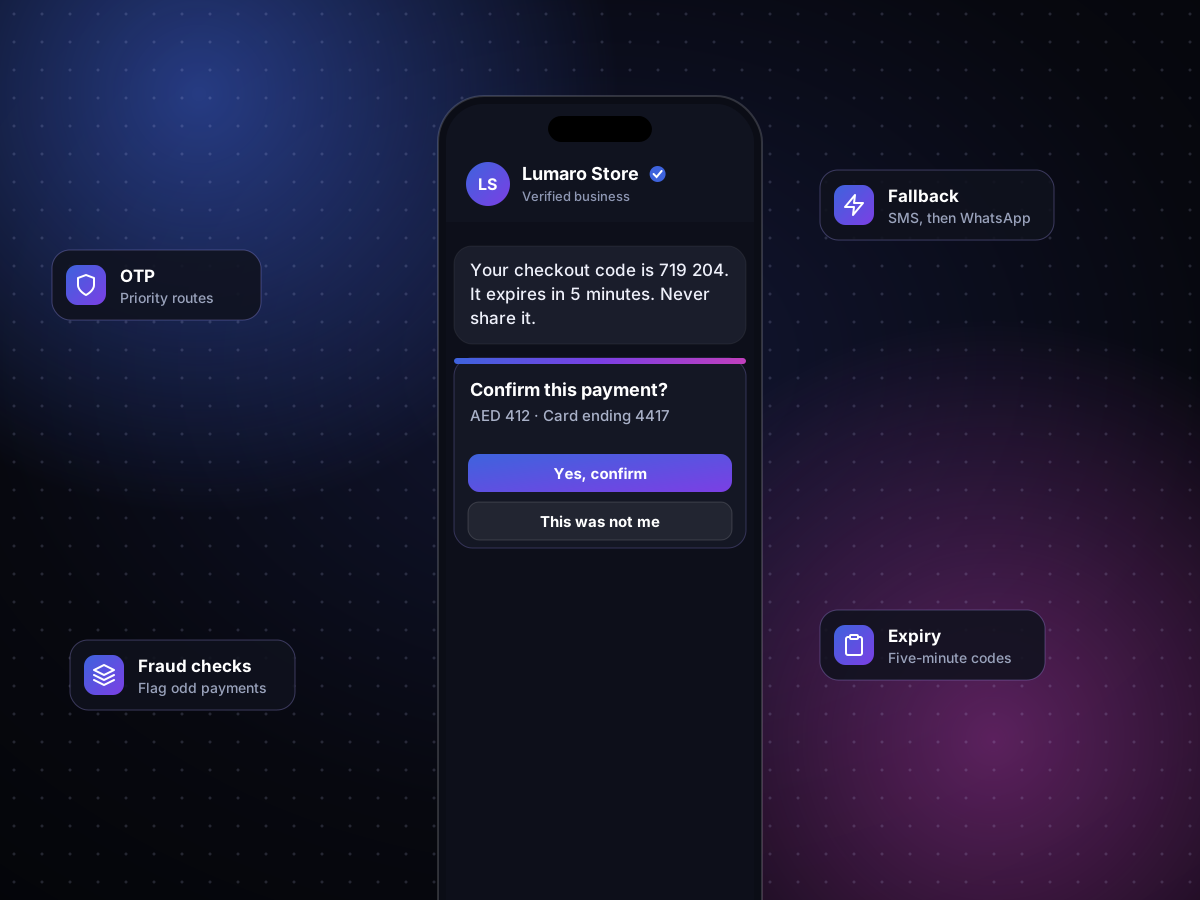

Every login screen that asks for a second factor is choosing, somewhere behind the scenes, between a handful of genuinely different approaches — each with its own trade-offs between security, cost, and how much friction it adds for the user.
SMS OTP
A one-time code sent by text message, entered alongside a password. Its biggest strength is universal reach: it works on any phone, requires no app installation, and is instantly familiar to virtually every user. Its main weakness is exposure to SIM-swap fraud, where an attacker convinces a carrier to transfer a victim's number to a new SIM and intercepts the code. For most consumer-facing authentication, SMS OTP remains the highest-reach, lowest-friction option, particularly where user familiarity and universal device support matter more than defending against a targeted, resource-intensive attack.
Authenticator Apps
Apps like Google Authenticator or Authy generate time-based codes locally on the device, without any network transmission. This eliminates SIM-swap risk entirely, since there's no message being intercepted. The trade-off is setup friction — the user has to install an app and complete an enrollment step — and a real risk of lockout if they lose or replace their device without having backed up their authenticator data.
Email OTP
Sending a one-time code by email rather than SMS. It avoids SIM-swap risk, but inherits email's own weaknesses: slower delivery in practice, and security that's only as strong as the user's email account itself — which is often protected by nothing more than a password, sometimes the same password being reset in the first place.
Push Notifications
A prompt sent directly to a trusted, already-authenticated app on the user's device, asking them to approve or deny a login attempt with a single tap. This tends to offer the best balance of security and low friction, but requires the user to already have the business's app installed — a real barrier for one-off transactions or newer users.
How to Actually Choose
- Maximum reach, lowest setup friction: SMS OTP;
- Strongest protection against SIM-swap, willing to accept setup friction: authenticator app;
- Already have an app with an existing user base: push notification; and
- Fallback option when a primary method fails: email OTP, generally not as a sole method.
Many businesses land on offering more than one, using SMS OTP as the default for reach and simplicity, with an authenticator app option for security-conscious users who want it.
Getting Started
Cyberscape provides reliable OTP SMS delivery as part of our messaging platform, built for the speed and deliverability authentication flows depend on. See our Services page for the full lineup.