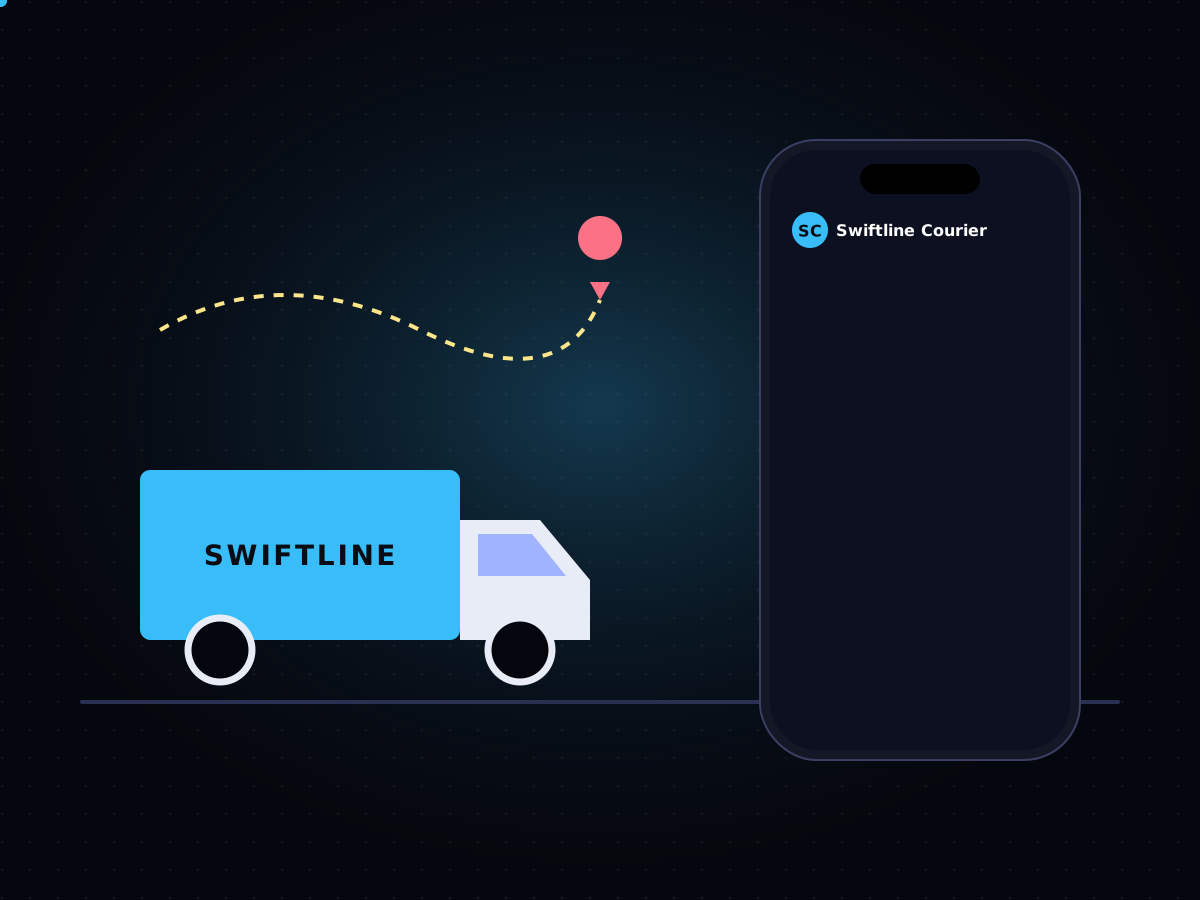

"Your package is out for delivery" tells a customer almost nothing useful — not when, not where, not what to do if they'll miss it. Logistics companies are increasingly using RCS to replace that vague notification with something a customer can actually act on.
Why Delivery Tracking Is a Natural Fit for RCS
Delivery tracking already involves visual, structured information — a map, a progress timeline, a package photo for proof of delivery. SMS forces all of that into a link the customer has to tap through; RCS displays it natively in the message, which matters for a use case where customers often check tracking status repeatedly throughout the day.
What RCS Enables for Logistics Specifically
- Visual delivery progress — a status carousel showing "Picked Up," "In Transit," "Out for Delivery," and "Delivered" as a single visual timeline rather than four separate texts;
- Interactive delivery options — one-tap buttons to reschedule, redirect to a pickup point, or leave delivery instructions, handled directly in the message instead of requiring a phone call or app;
- Proof of delivery — a photo of the delivered package or a signature confirmation displayed directly in the notification; and
- Verified courier branding — the courier's name and logo on the message, which matters in a space where delivery-scam smishing (fake "your package needs a customs fee" texts) is a widespread, well-known problem.
Reducing Missed Deliveries
A significant share of failed delivery attempts come down to timing mismatches that better communication could have prevented — the customer wasn't told a narrow enough window, or had no easy way to redirect the delivery once they realized they wouldn't be home. Interactive RCS notifications that let a customer act in the moment (redirect, reschedule, authorize leaving the package) directly reduce the redelivery attempts that cost logistics companies real operational money.
Guaranteed Delivery of the Notification Itself
Logistics notifications are inherently time-sensitive, which is exactly why automatic SMS fallback matters here: where a recipient's device doesn't support RCS, the message still arrives as plain SMS rather than failing outright. See What Is RCS Business Messaging? for how that fallback mechanism works.
Delivery Slots, Read Receipts and Fallback
- Delivery slots — buttons for “confirm”, “reschedule” or “leave with neighbour” reduce failed attempts and calls to the depot;
- Read receipts — where available, they show whether a recipient has opened a notice, which helps decide when to retry or call;
- Fallback — if RCS can’t be delivered, send an SMS with a short link so the recipient is still told;
- Verified sender — parcel-delivery scams are widespread, so a verified brand identity is a practical safeguard; and
- Consent — delivery notices are service messages, but check your market’s rules on what may be added to them.
Our view: measure failed deliveries, not message opens
Logistics teams are tempted to judge messaging by opens and clicks. The number that pays for the project is failed first-attempt deliveries, and the cost of the second visit.
We’d track that before and after introducing interactive messages, and be sceptical of any claim, ours included, that doesn’t say how it was measured.
Getting Started
Cyberscape's RCS Business Messaging runs alongside SMS, WhatsApp, and Email on one platform, suited to the real-time, interactive notifications logistics and delivery tracking depend on. See it on our RCS Business Messaging page, or explore our support for the sector on the Transportation & Logistics industry page.