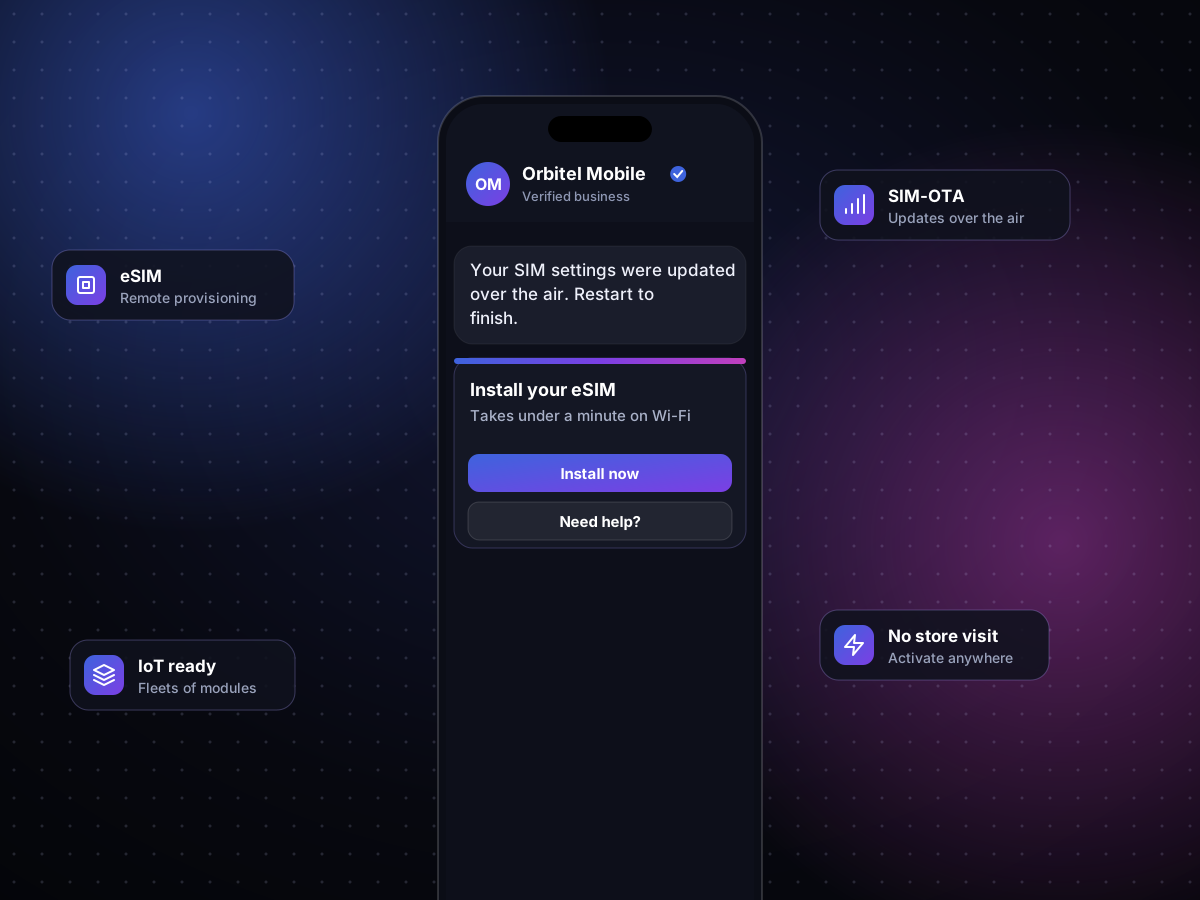

The debate over eSIM versus physical SIM isn't really about which technology is "better" in the abstract — it's about which trade-offs matter more for a given operator, subscriber, or device category. Both are likely to coexist for years yet, each doing what it's genuinely suited for.
The Core Difference
A physical SIM is a removable card a subscriber inserts into a device and swaps when they change networks or upgrade phones. An eSIM is embedded directly into the device's hardware, with subscriber profiles provisioned and switched remotely rather than physically swapped — see What Is eSIM Management? for how that provisioning actually works.
Where eSIM Has the Clear Advantage
- Instant activation — a subscriber can be connected in minutes, remotely, without a store visit or waiting for a card to ship;
- Multiple profiles per device — useful for travelers carrying both a home and local network profile, or anyone managing separate personal and work lines on one device;
- No physical logistics — no card manufacturing, shipping, or in-store inventory for the operator to manage; and
- Better fit for compact and embedded devices — wearables and IoT devices too small to accommodate a physical SIM slot at all.
Where Physical SIM Still Holds Up
- Universal device compatibility — every phone ever made supports a physical SIM; eSIM support, while now widespread on newer flagship devices, isn't yet universal, especially on older or budget devices;
- Simple, familiar transfer between devices — physically moving a SIM to a new phone remains the most straightforward way to switch devices for many users; and
- No dependency on network connectivity for the swap itself — a physical SIM works the moment it's inserted, without needing an active data connection to complete a remote provisioning step.
What This Means for Operators
The practical reality for most operators isn't choosing one over the other — it's supporting both well. Subscribers with eSIM-capable devices increasingly expect the instant, remote provisioning experience; subscribers with older devices still need physical SIM support that works reliably. Operators that treat eSIM support as an afterthought risk losing the growing segment of subscribers actively choosing devices and plans based on it being available.
Getting Started
Cyberscape provides eSIM management alongside traditional SIM support as part of our System Integration & VAS services, so operators can serve both segments from one platform. Explore every platform on our System Integration & VAS Solutions page.